
Should I Replace My GE Slim Panel?
Maybe.
Unlike Federal Pacific or Zinsco panels, GE panels are not generally considered dangerous or defective. In fact, many GE panels are still providing reliable service after decades of use.
That said, age, condition, and capacity all matter.
If your GE panel is 25 to 40 years old, it may be time to start thinking about what comes next. Electrical panels aren't designed to last forever, and many older panels were installed long before today's homes were filled with electric vehicles, hot tubs, air fryers, gaming systems, home offices, and enough phone chargers to power a small social media company.
One of the most common panels we encounter is the GE "Slim" panel, which uses thin THQP breakers to squeeze more circuits into a limited amount of space.
When these panels were installed, they were a clever solution.
Today, they often tell us something different.
Usually, they tell us the homeowner has run out of room.
Remodeling Changes the Conversation
One thing homeowners are often surprised to learn is that a panel that works perfectly fine today may become a problem during a renovation.
Many older GE Slim panels rely heavily on thin THQP breakers to maximize the number of circuits in a limited amount of space. While those breakers can be perfectly acceptable in the right application, they create a challenge when modern code requirements enter the picture.
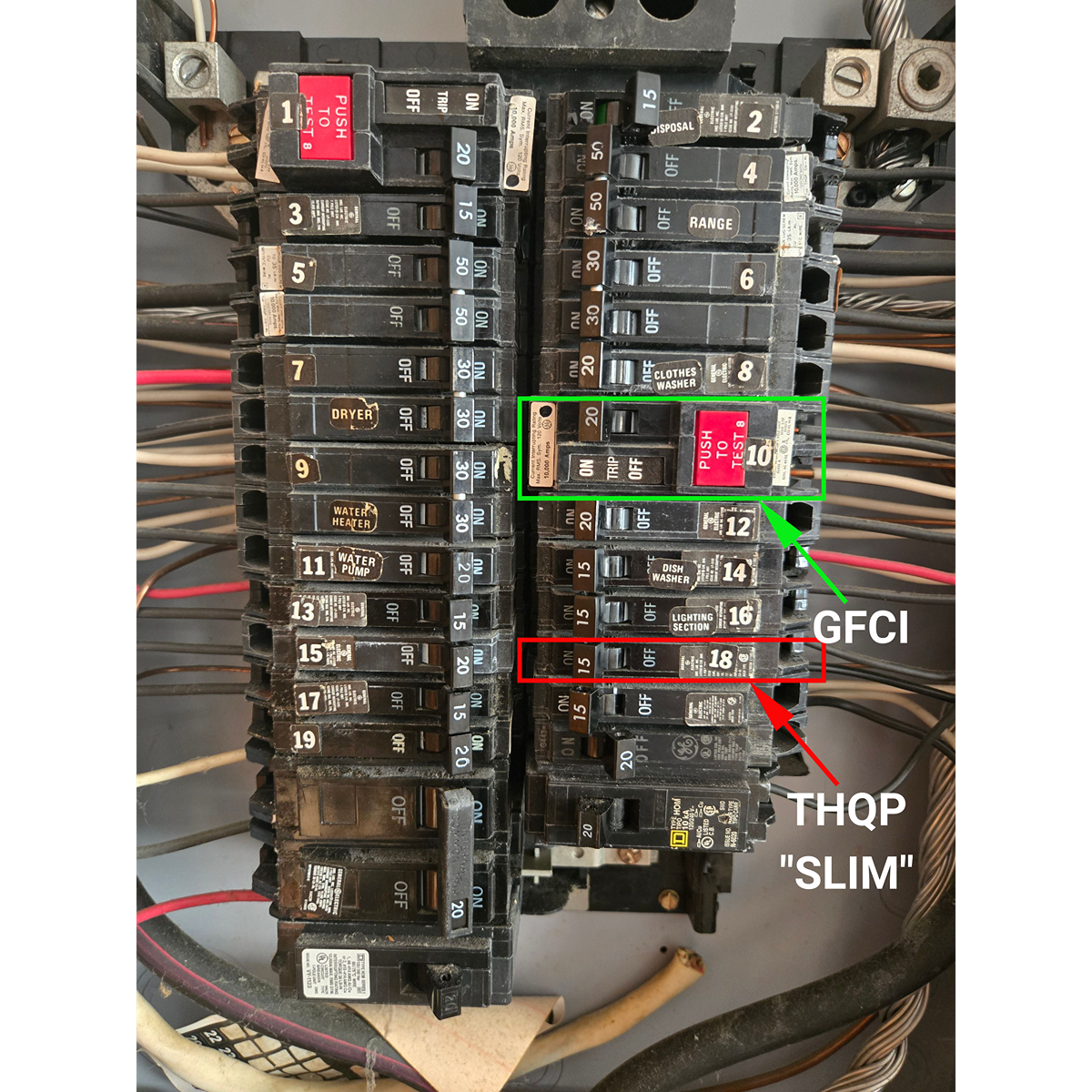
Today, many new circuits require AFCI protection, GFCI protection, or a combination of both. These specialty breakers are typically twice the size of the older thin breakers found in many GE Slim panels and often a full breaker space where a THQP requires half a space.
Add a kitchen remodel, finished basement, bathroom renovation, hot tub, EV charger, generator interlock, or other permitted project, and available panel space can disappear quickly.
Whole-home surge protection can create the same issue. Modern surge protective devices typically require dedicated breaker spaces that simply don't exist in many older crowded panels.
We've seen plenty of situations where a homeowner starts with a simple remodel and discovers the existing panel doesn't have enough room to accommodate the required breakers and code upgrades.
In those cases, you electrician isn’t recommending replacement because it's unsafe.
It's because modern electrical requirements have outgrown it.
Signs It May Be Time for an Upgrade
Not every GE Slim panel needs replacement right now, but there are a few things that should get your attention:
Frequent breaker trips
Burning smells
Buzzing sounds
Rust or corrosion
Discolored breakers
Evidence of overheating
A panel that is completely full
Remodeling plans
Any of these issues deserve a closer look.
The Capacity Problem
The biggest issue we see isn't usually safety.
It's space.
Many GE Slim panels are packed to the limit. Over the years, homeowners add basement circuits, outdoor receptacles, sheds, pools, hot tubs, garages, EV chargers, workshop equipment, and all the other things that make a house feel like home.
Eventually there isn't anywhere left to go.
At that point, some homeowners start looking for creative ways to squeeze in "just one more breaker."
That's usually where we recommend stepping back and looking at the bigger picture.
If you're planning a service upgrade, EV charger, hot tub, generator connection, or major renovation, a panel replacement is often a better investment than trying to continue expanding an already crowded panel.
What About the Thin Breakers?
The thin THQP breakers themselves aren't automatically a problem.
When installed properly and used within the panel's listing, they can operate safely for many years.
However, older panels sometimes develop loose connections, wear, or heat-related issues after decades of service. We've also seen situations where heavily loaded circuits and years of use have taken a toll on the equipment.
As with most electrical systems, age eventually catches up with everything.
So Should You Replace It?
If your GE Slim panel is in good condition, has available capacity, and isn't showing signs of overheating or damage, replacement may not be necessary.
If it's packed full, showing signs of age, or you're planning to add significant electrical loads, it may be worth discussing an upgrade before it becomes a problem.
The goal isn't replacing equipment simply because it's old.
The goal is making sure your electrical system still matches the way you actually live.
Sometimes that old panel still has plenty of life left.
Sometimes it's quietly telling you it's ready to retire.
The trick is knowing the difference.
Stay legendary.
